A stroke represents a major disruption to neural pathways, but cerebral tissue possesses a remarkable power called neuroplasticity. This allows healthy regions of the brain to learn and take over functions previously handled by the damaged areas.
1. Task-Oriented Repetitive Training
Passive range of motion is insufficient. True recovery requires stroke rehabilitation focused on goal-oriented tasks, such as reaching for objects or guided standing, to force the brain to forge new motor connections.
2. Regulating Hypertonia & Spasticity
Hyperactive muscle reflexes can lead to painful muscle shortening and joint contractures. Specialized neurological step-down rehabilitation incorporates neuro-cryotherapy and prolonged stretching to calm overactive nerve groups.
3. The Subacute Recovery Window
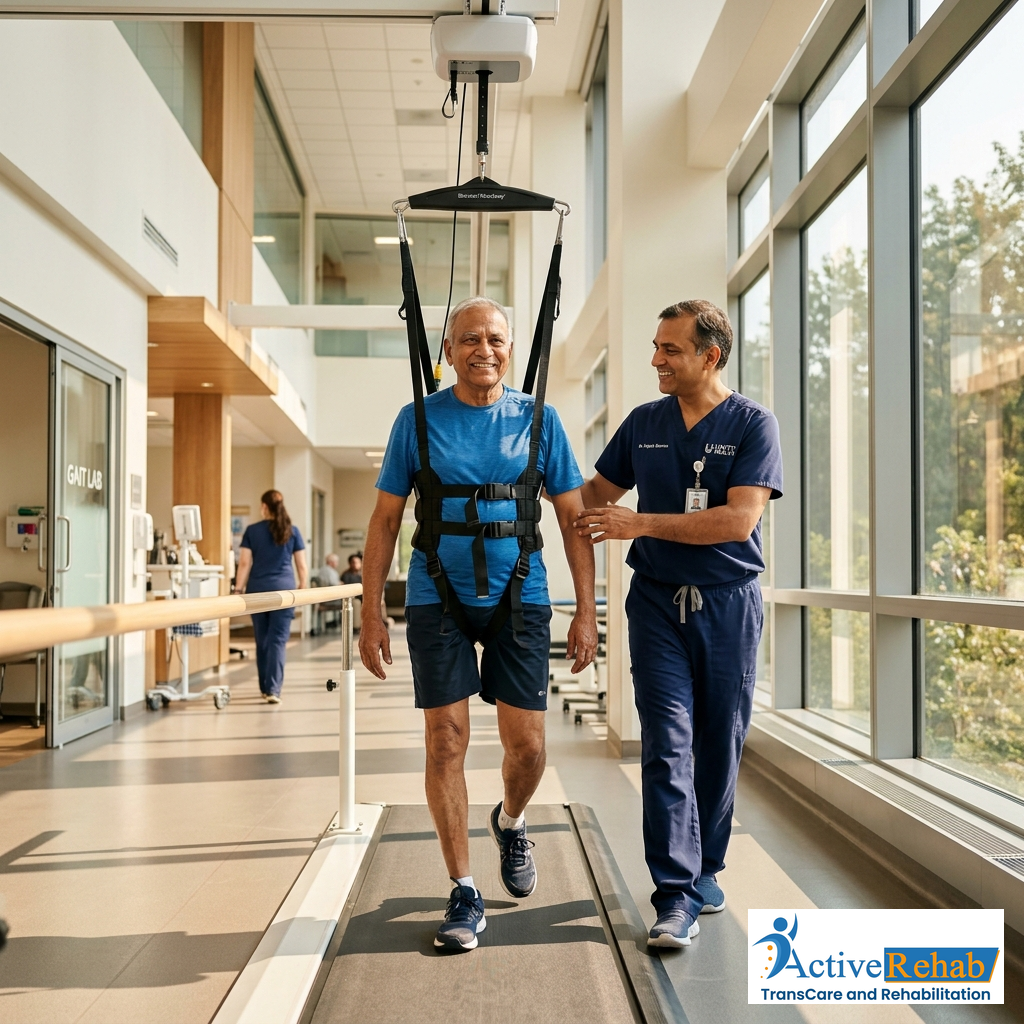
The first 3 to 6 months post-stroke represent the golden window for motor recovery. In a dedicated transition facility, patients receive the intensive, multi-hour daily therapy and round-the-clock nursing supervision needed to maximize their independent walking outcomes.