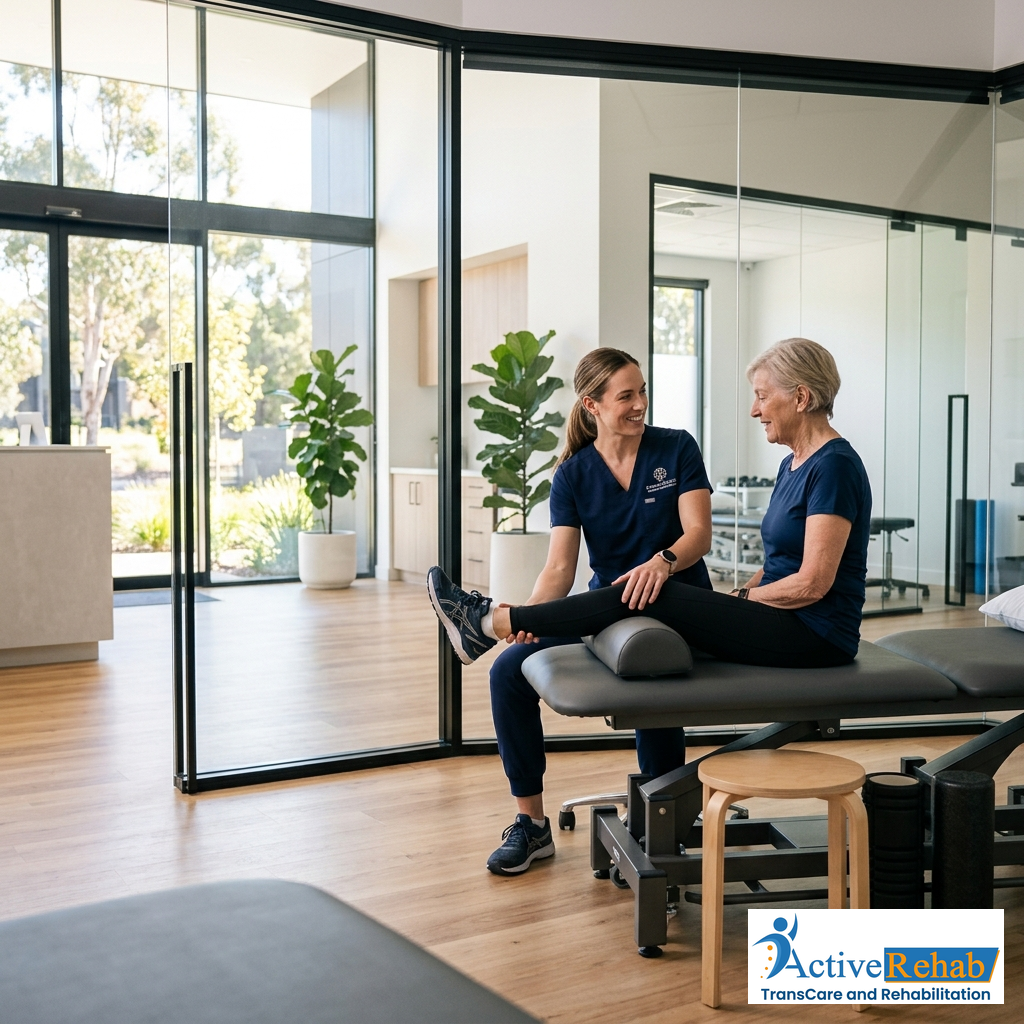
Undergoing a total knee replacement is the first step toward pain-free living, but the final outcome is determined by post-operative orthopedic care. A common complication is the development of an asymmetrical limp, which, if uncorrected, puts stress on the other knee, hips, and lower back.
1. Overcoming the Fear of Weight-Bearing
Directly after surgery, the brain protective reflex restricts loading on the joint. Specialized step-down clinical care utilizes guided parallel rail corridors to systematically retrain the foot-strike pattern and center of gravity, returning immediate walking confidence.
2. Reversing Quadriceps Muscle Atrophy
Surgery causes temporary muscle shutdown. Targeted isometric quadriceps contractions and light progressive resistance band training are essential to stabilize the patella and ensure complete knee extension angles.
3. The Clinical Step-Down Advantage
Step-down transitional facilities bridge the gap between hospital discharge and going home, providing continuous swelling monitoring, sterile dressing oversight, and intensive daily therapy sessions.