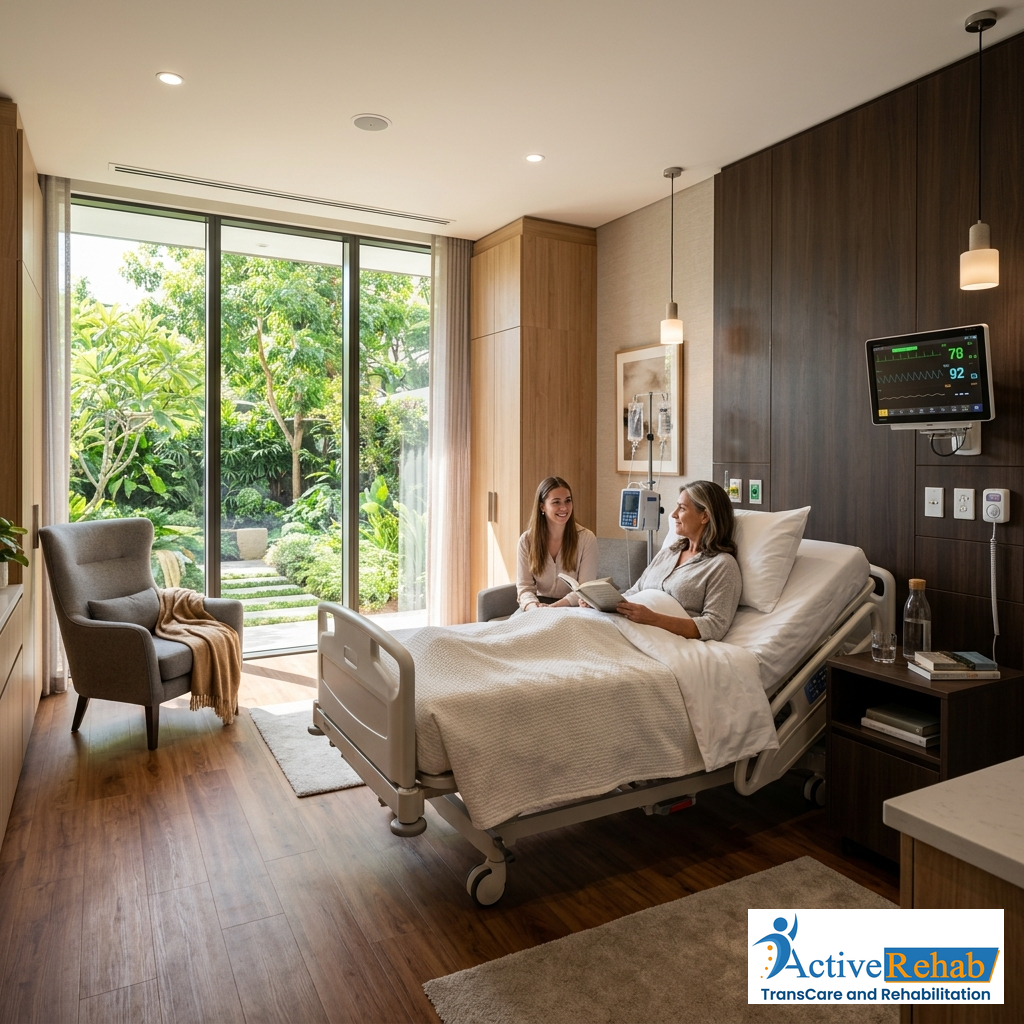
The day of hospital discharge is often met with mixed emotions. While patients and families are eager to leave the sterile environment of an acute care ward, they are frequently unprepared for the complex medical and physical care required at home.
The "Care Gap" Dilemma
Modern hospitals are designed for acute crisis management. Once a patient is medically stable, the hospital's primary goal is discharge. However, being "medically stable" does not mean a patient is "fully healed." The sudden drop in supervision—from 24/7 ICU/ward nursing to family care—can lead to severe anxiety, medication errors, and physical setbacks.
What is Step-Down Care?
Step-down or transition care facilities represent the intermediate safety net. They provide a clinical, warm environment where patients receive continuous nurse monitoring, expert orthopedic step-down rehabilitation, wound care, and medication management without the astronomical costs of a hospital room.
Benefits of Step-Down Rehabilitation:
- Reduced Readmission Rates: Continuous medical supervision prevents minor post-op complications from escalating into emergency hospital readmissions.
- Accelerated Recovery: Daily, structured neurological step-down rehabilitation ensures patients regain strength and mobility much faster than they would resting at home.
- Family Peace of Mind: Families are spared the intense stress of acting as untrained medical orderlies, knowing their loved ones are in expert clinical hands.
Transition care is the final, essential link in the modern healthcare chain, ensuring that patients don't just survive their surgeries, but thrive in their recoveries.